|
|
Crystallization of Liquid Epoxy Resins
Crystallization
Epoxy resins, under certain conditions, can become solid or have a slush like appearance. This
is called crystallization and it is where some component parts of the epoxy resin form a crystal
like structure.
The crystallization of an epoxy is very similar to water freezing in that it goes from a liquid
state to become a solid. And like water once warmed it will revert back to it liquid state without
any change or damage to the properties of the resin. But unlike water which melts at approximately
0°C the melting point of the Epoxy is 50°C.
How to tell if your resin is affected.
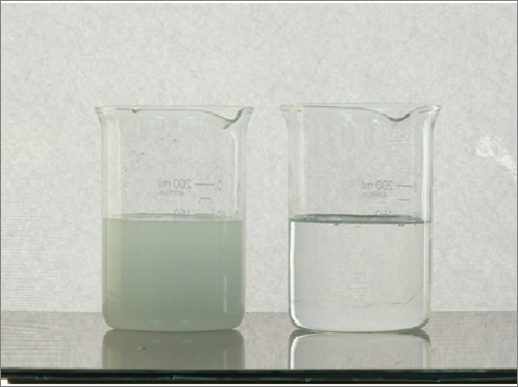
The first signs of crystallization are that the resin becomes cloudy, hazy or milky which are
more easily seen in clear resin systems like the Ampreg 21. This opacity is generated by small
crystals free floating in the resin. But as the size of the crystals increases the resin becomes
more like a slush in that the material will still flow but sluggishly. As this crystallization of the
resin increases the slush forms larger lumps.
As the density of the crystallized resin is higher than the material surrounding it sinks to the
bottom of the container, building in thickness until the whole container becomes solid.
Why has this happened?
First, it will not always happen but some things make it more likely to occur.
Viscosity
Lower viscosity systems are more likely to crystallize as the material can flow into the matrix
patterns required for crystallization.
Purity
The higher the purity of the resin increases the possibility as there are less additives to disrupt
the crystalline matrix forming.
Temperature fluctuations
But the main cause of this effect is repeated changes in temperature; the resin being warmed
and cooled repeatedly. The thermal cycling helps to orientate the material into the right chemical
structure for the material to form crystals. But this should be greatly lessened if the material
is stored as directed in the data sheets which normally are between 10°C to 25°C.
The temperature fluctuations that occur between night and day start or enhance the crystal
growth process.
Dust & Contamination
The introduction of dust particles into the resin can accelerate the process as it does give the
crystallisation process a starting point or "seed" from which to start. And once the process is
started it can progress more quickly due to the self organising nature of chemistry.
How to correct the situation
Remember as stated above this process can be reverted with no damage to the resin - just like
melting water, but the temperature involved will be higher.
I this case you will need to heat the resin to a minimum of 50°C and hold it there until it all
completely melts. If any crystals remain, the whole container may become solid again with a
few days. But if the pail/drum is heated to 50°C until ALL of the crystals have melted the resin
will be fine for months if not years if stored correctly.
The point to note is that it is recommended to heat the material for a longer period at 50°C to
ensure complete melting of the crystals and not remove the container too early from the heat.
When heating the crystallised resin the heat will not be transfer quickly and achieving a
consistent bulk resin temperature will take quite some time, possibly even 2-3 days for drums
or IBCs of resin. If the resin is not solid and does flow, it is good practice to mix the material
regularly to ensure even heating.
It is not possible to give an exact time required to completely remove the crystals as it will
depend on the container size, heat source and regularity of mixing but it is better to give the
material longer at 50°C to ensure complete reversal of the resin to it's liquid form. With some
clear resin systems, like the Ampreg 21, it is possible to see when the crystallized material has
melted as the resin will change from cloudy to clear.
Once the material has reverted back to its liquid state it is perfectly suitable for all applications
and should be used as specified in the technical datasheet.
If you have any questions please do not hesitate to contact a member of the Customer or
Technical Support team. |
|

 |玻璃钢复合材料商城|联系我们|Archiver|手机版|小黑屋|
FRP玻璃钢复合材料论坛
蜀ICP备10204395号-1
|玻璃钢复合材料商城|联系我们|Archiver|手机版|小黑屋|
FRP玻璃钢复合材料论坛
蜀ICP备10204395号-1





 发表于 2010-12-26 10:22:24
 楼主
楼主